Blog Details
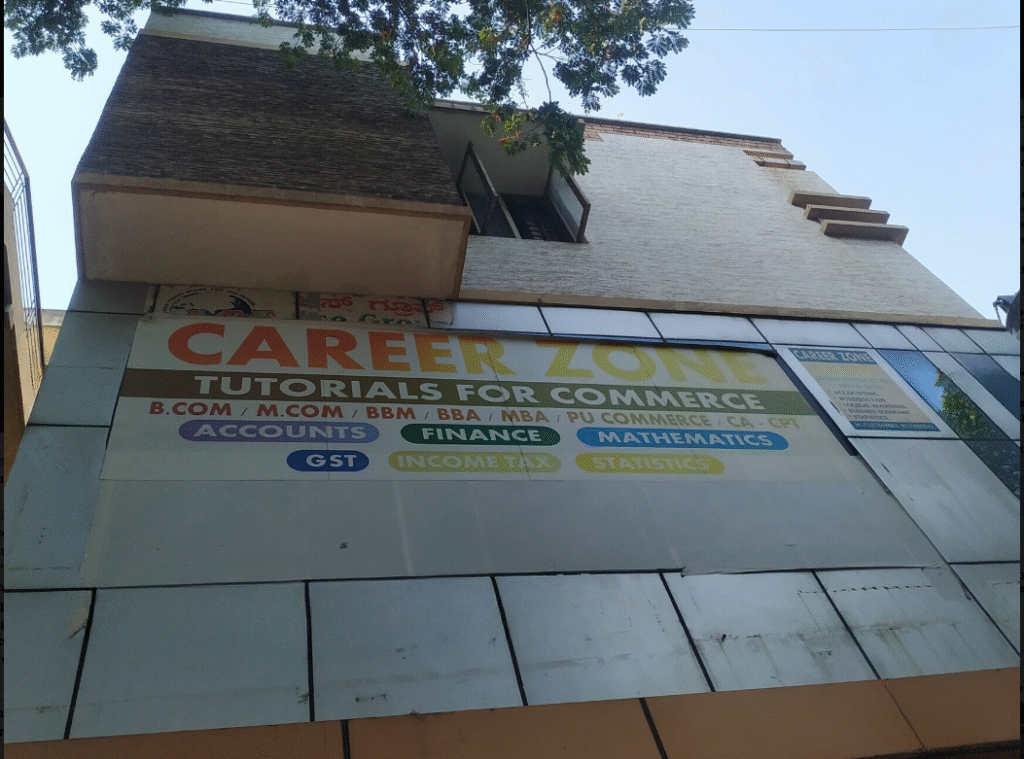
CareerZone's 1st PUC Commerce Coaching
Enroll Now
First PUC Commerce Coaching: Mistakes Students Make in Class 11th.
Stepping into Class 11 Commerce is a major shift for students who have just completed their 10th grade.
The subjects get deeper, the syllabus expands, and the expectations from students rise.
This is why many students look for the right 11th Commerce coaching to build a strong foundation.
However, despite enrolling in classes, several students still struggle because they fall into common mistakes that affect their learning.
In this article, we’ll explore the most frequent mistakes students make in Class 11 Commerce, and how effective coaching can help avoid them. If you are planning to pursue careers like CA, CS, CMA, or management, it’s crucial to fix these habits early.

Why 11th Commerce Coaching Matters
Commerce in Class 11 introduces subjects like Accountancy, Business Studies, Economics, and Mathematics, each of which requires new skills.
Many students assume it’s just an extension of Class 10, but the reality is different. Proper coaching offers:
- Concept clarity with practical examples
- Regular tests to track progress
- Expert strategies to prepare for future competitive exams
- Personalized doubt-solving sessions
Without the right approach, students often waste valuable time, which later reflects in weaker performance in Class 12 and beyond.
Mistake 1: Underestimating the Importance of Basics
One of the biggest mistakes students make is ignoring the fundamentals. For example, in Accountancy, if you don’t understand the basic rules of debit and credit, advanced chapters like partnership accounts or company accounts become a nightmare. Similarly, in Economics, failing to grasp basic terms like demand, supply, and elasticity creates confusion later.
How 11th Commerce coaching helps: Coaching classes break down concepts step-by-step. Teachers use real-life examples to make sure students understand and remember the basics.
Mistake 2: Treating Commerce Like a Memory-Based Stream
Another common misconception is that Commerce is all about theory and mugging up definitions. While subjects like Business Studies have theoretical aspects, Accountancy and Economics require logical thinking and application. Students who treat the stream as purely memory-based often struggle in exams.
Role of coaching: A good coaching institute uses case studies, numerical practice, and scenario-based learning to show students the application side of Commerce.
Mistake 3: Poor Time Management
Many Class 11 students struggle to balance school, coaching, self-study, and co-curricular activities. They either overcommit to one subject or neglect important chapters until the last moment. This habit creates unnecessary stress during exams.
How coaching solves this: Most 11th Commerce coaching institutes provide structured study plans and weekly targets. This helps students manage their time better and stay on track.
Mistake 4: Neglecting NCERT Textbooks
Students often rely only on reference books or coaching notes, thinking NCERT is too basic. But CBSE examinations, as well as competitive exams like CUET or CA Foundation, are directly based on NCERT. Ignoring them is a costly mistake.
Solution: The right coaching ensures NCERT chapters are thoroughly covered before moving on to advanced resources.
Mistake 5: Not Practicing Numerical Regularly
Subjects like Accountancy and Statistics in Economics require consistent practice. Many students delay solving problems and focus only on theory, which leads to weak numerical skills.
Coaching advantage: Coaching classes assign daily practice questions and hold problem-solving sessions, ensuring students stay in touch with numerical portions.
Mistake 6: Avoiding Doubt Clarification
Some students hesitate to ask questions in class, thinking they’ll look “weak” in front of peers. Over time, small doubts pile up, leading to major gaps in understanding.
Coaching support: A strong coaching environment encourages doubt-solving sessions, one-on-one interactions, and extra classes to help students clear confusion without hesitation.
Mistake 7: Ignoring Career Planning Early
Class 11 is the starting point for many career paths in Commerce. Whether you want to pursue Chartered Accountancy (CA), Company Secretary (CS), Cost Management Accounting (CMA), or MBA, building a foundation in Class 11 and 12 is crucial. Many students delay career planning until Class 12, which limits their options.
Benefit of coaching: Experienced mentors in coaching centers guide students about future opportunities and align studies accordingly.
Mistake 8: Over-Reliance on Coaching
While coaching is important, relying only on coaching notes without self-study is equally dangerous. Some students assume that attending classes is enough. Without revising at home and practicing independently, the knowledge doesn’t stick.
Balanced approach: Use coaching for guidance and concept clarity, but dedicate time every day for self-study, revision, and practice.
Competitor Insight: Why Students Choose the Best Coaching Institutes
Many students search for Best First PUC Commerce coaching near me because they want personalized guidance.
Competitor institutes highlight features like small batches, mock tests, and success in producing top scorers.
When choosing coaching, students should look for:
- Experienced faculty
- Structured syllabus coverage
- Regular assessments
- Student-friendly teaching methods
This ensures you don’t repeat the same mistakes others make in Class 11th.
Final Thoughts
Class 11 Commerce is the stepping stone to future success in business, finance, and management fields. Avoiding these common mistakes and enrolling in the right 11th Commerce coaching can make your journey smoother.
Remember:
- Build strong fundamentals
- Focus on understanding, not rote learning
- Practice regularly
- Manage time wisely
- Take career planning seriously
By following these strategies and learning from expert mentors, you’ll not only score well in Class 11 but also set a strong base for Class 12 and professional courses ahead.